Strength & Endurance
Kankrej
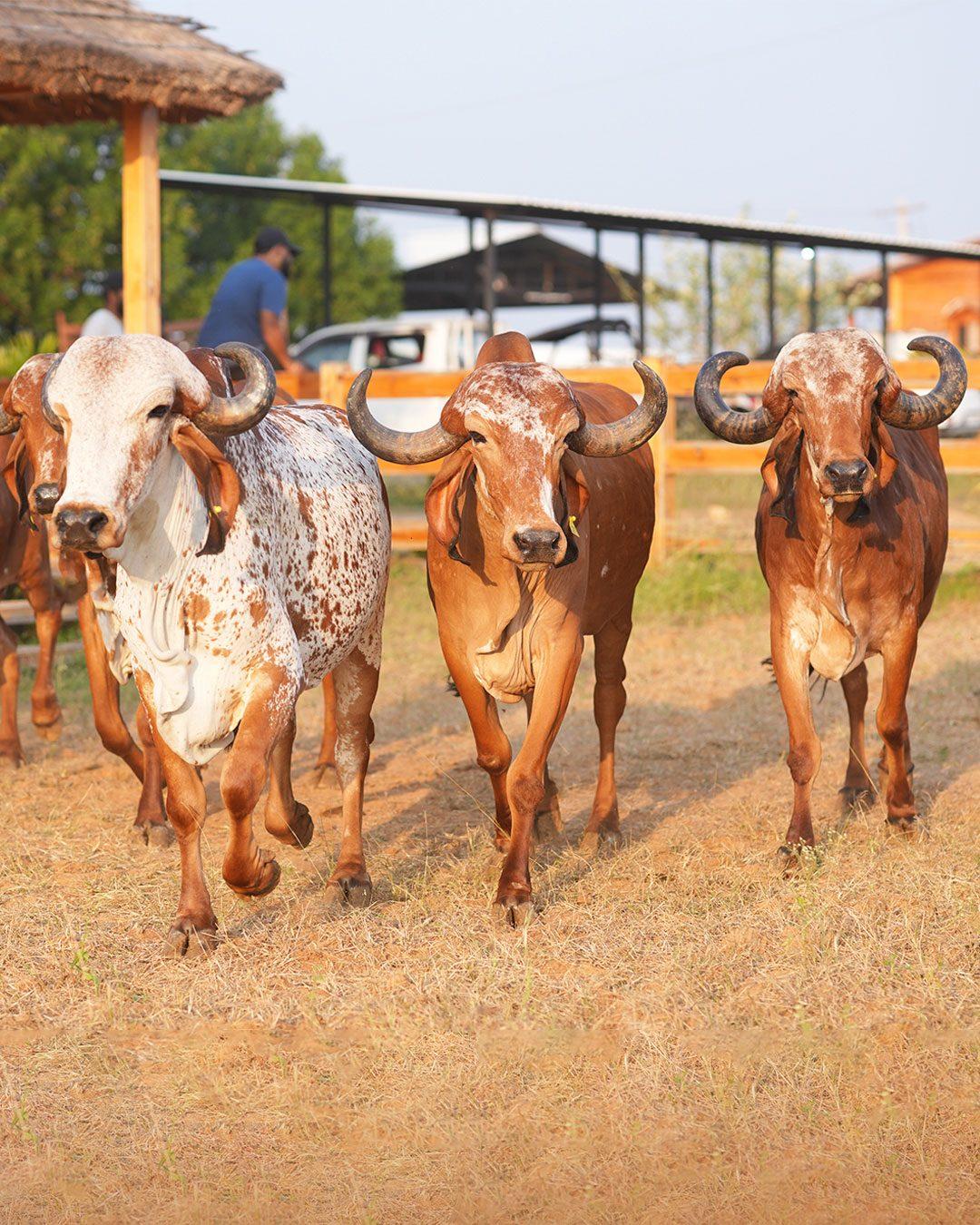
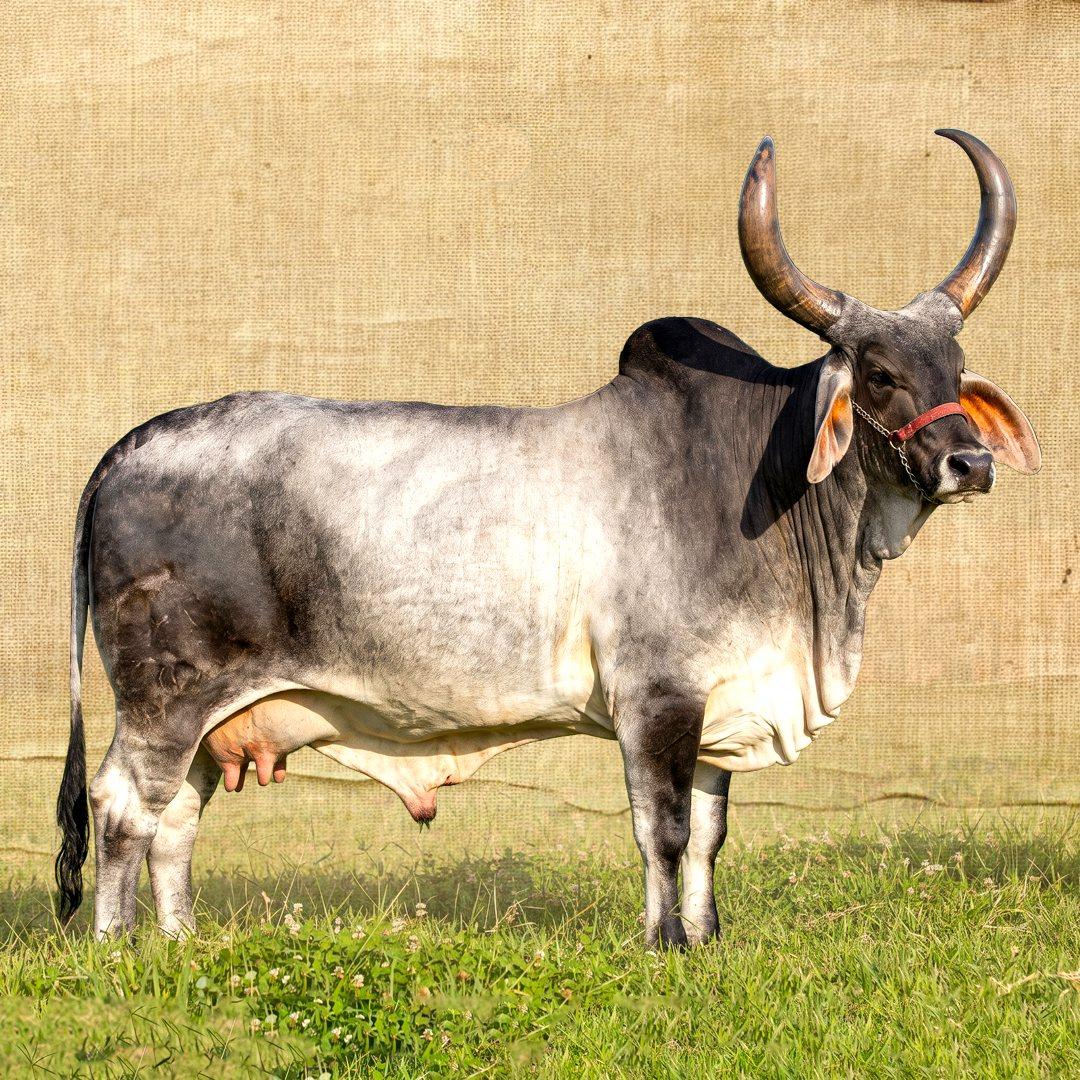
Kankrej is a big, silver-grey dual-purpose breed from the edge of the Rann of Kutch: strong enough to pull, productive enough to milk. In Brazil, where it is called Guzerá, breeders used embryo technology to speed up its genetic gain.
Cattle · Bos indicus (zebu)
- Strong body
- Endurance
- Disease resistance
At a glance
Two kinds of number, side by side: what this breed typically gives under good management, and the national breed average recorded by ICAR-NBAGR across every kind of farm.
- Litres a day, good management
- 8–12
- Hebbevu’s typical range
- Per lactation, national average
- 1,738 kg
- ICAR-NBAGR breed average
- Milk fat
- 2.9–4.2%
- Cow body weight
- 343 kg
Selected Kankrej cows in villages have produced about 4,900 kg in a lactation.
Getting to know the Kankrej
Where it comes from
Banaskantha, Mehsana, Sabarkantha, Kutch, Ahmedabad and Kheda in Gujarat, and Barmer and Jodhpur in Rajasthan, south-east of the Rann of Kutch.
Named after Kankrej taluka in Banaskantha district.
WadadVagadiaTalabdaNagarBonnaiHow to recognise it
- Coat
- Silver-grey to iron-grey; bulls are darker on the fore- and hindquarters and the hump.
- Horns
- Strong and lyre-shaped, with skin running further up the horn than in other breeds.
- Gait
- A distinctive ‘sawai chal’, an easy one-and-a-quarter pace.
Size
- Cow
- 343 kg
- Bull
- 525 kg
- Cow height
- 125 cm
- Bull height
- 158 cm
Average adult size, ICAR-NBAGR.
Strengths in the field
Dual-purpose breed with strength and productivity
Built for
- Resistant to tick fever
- Tolerates heat stress well
- Very low rates of contagious abortion and TB
Used for
- Milk
- Draught and road transport
Around the world
Proof that embryo technology works for zebu
Kankrej cattle taken to Brazil at the end of the 19th century became the Guzerá breed, which also helped form the American Brahman.
From 1994, Brazilian breeders ran a Guzerá dairy programme using embryo transfer and later in-vitro embryo production. Genetic gain for milk was about 9.4 kg a year in the embryo-based nucleus, against about 1 kg a year without it. It is one of the clearest records of what reproductive technology can do for an indigenous breed.
- Brazil
- USA
Breed records
The published facts in one place. Averages, not guarantees. Individual animals and well-run herds can do far better.
| Record | Kankrej |
|---|---|
| Species | Cattle · Bos indicus (zebu) |
| Native tract | Banaskantha, Mehsana, Sabarkantha, Kutch, Ahmedabad and Kheda in Gujarat, and Barmer and Jodhpur in Rajasthan, south-east of the Rann of Kutch. |
| Also known as | Wadad, Vagadia, Talabda, Nagar, Bonnai |
| Typical daily yield, good management | 8–12 litres/day |
| National average per lactation | 1,738 kg |
| Milk fat | 2.9–4.2% |
| Milk type | A2 (indigenous zebu breeds are predominantly A2A2) |
| Age at first calving | 47 months |
| Calving interval | 15.1 months |
| Cow weight | 343 kg |
| Bull weight | 525 kg |
| Population | About 19.5 lakh Kankrej in India’s 2013 breed survey. |
What to know before you choose
A true dual-purpose animal
Kankrej gives moderate milk and real working strength. That suits mixed farms better than pure dairies.
Mind the calving interval
First calving comes at around 47 months and the calving interval is about 15 months, so fertility management matters.
Room to improve
The gap between the national average (about 1,740 kg) and selected cows (about 4,900 kg) is the opportunity good genetics can close.
Is this the right breed for you?
Choosing the right breed is the foundation of a successful dairy operation.
- 01How hot and dry does it get on your land?
- 02Can you hold feed quality through a bad season?
- 03Does your market pay a premium for A2 milk?
- 04How close is your nearest competent vet?
Sources and other breeds
Sources (4)
- ICAR-NBAGR breed registry (AGRI-IS)
- NDDB Dairy Knowledge Portal: Kankrej
- Peixoto et al. 2022, Frontiers in Genetics: Guzerá dairy programme and MOET
- Mukhopadhyay et al. 2025, Pesquisa Agropecuária Brasileira: Indian zebu in Brazil
- National averages come from the ICAR-NBAGR breed registry and the NDDB Dairy Knowledge Portal.
Interested in Kankrej genetics?
Tell us about your herd and we will help you decide whether this breed, and IVF, makes sense for you.