Global Legacy of Andhra Pradesh
Ongole
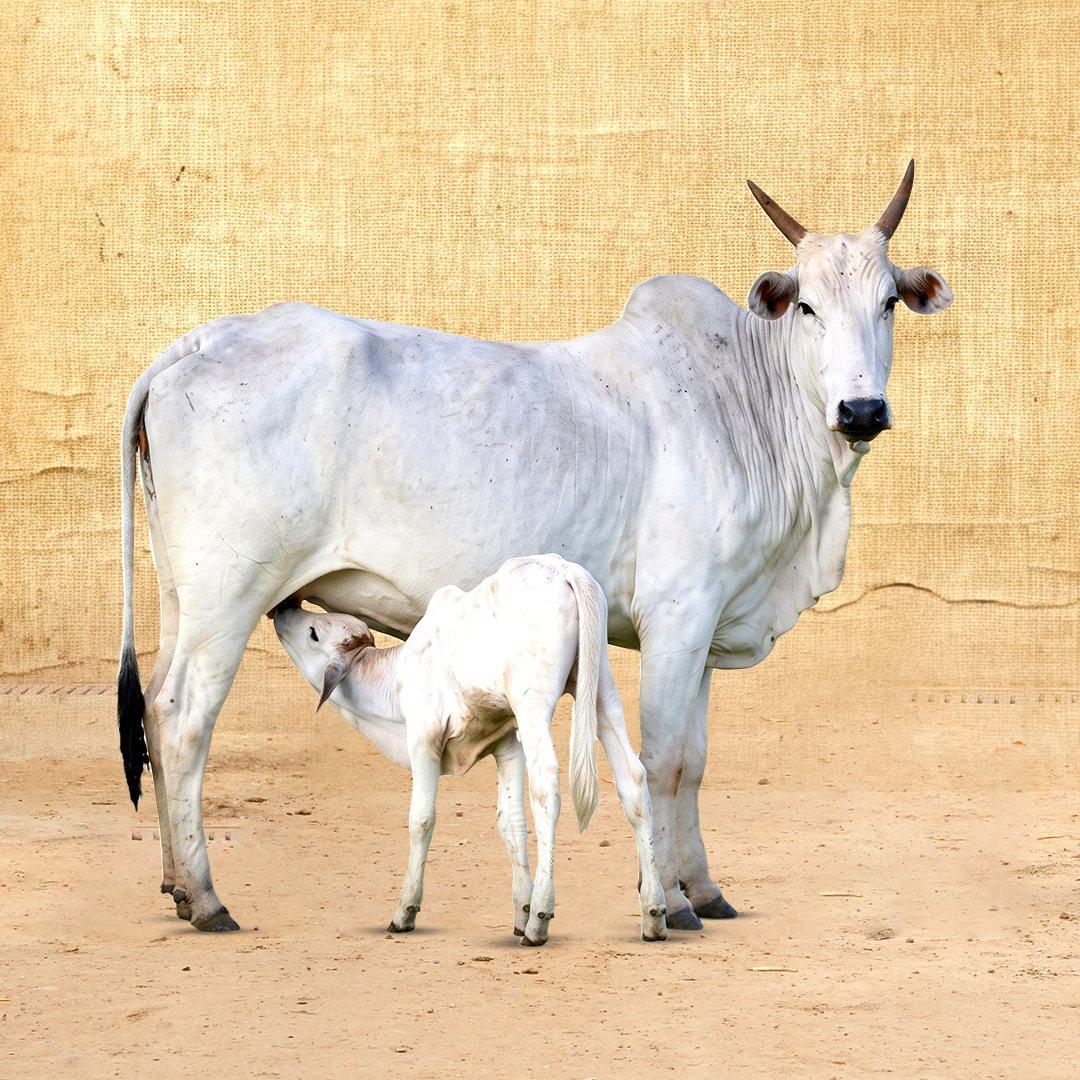
Ongole is Andhra Pradesh’s own breed: a powerful, glossy-white animal prized for strength and hardiness. Its descendants, the Nelore, now form the backbone of Brazil’s beef herd, and a Nelore cow once set the world record as the most expensive cow ever sold.
Cattle · Bos indicus (zebu)
- Strength
- Endurance
- Adaptability
At a glance
Two kinds of number, side by side: what this breed typically gives under good management, and the national breed average recorded by ICAR-NBAGR across every kind of farm.
- Litres a day, good management
- 8–10
- Hebbevu’s typical range
- Per lactation, national average
- 798 kg
- ICAR-NBAGR breed average
- Milk fat
- 3.8%
- Cow body weight
- 382 kg
Ongole is first a draught and dual-purpose breed; its national milk average is modest.
Getting to know the Ongole
Where it comes from
Prakasam (Ongole), Guntur, Nellore, Kurnool and East Godavari districts of Andhra Pradesh, along the coast from Nellore to Vizianagaram.
Named after the Ongole area. Also called Nellore, because Ongole taluk was once part of Nellore district.
NelloreHow to recognise it
- Coat
- Glossy white. Bulls carry dark grey markings on the head, neck and hump, with black points at the knees.
- Horns
- Short and stumpy, growing outward and backward.
- Build
- A large, fan-shaped dewlap, a black muzzle and a famously majestic gait.
Size
- Cow
- 382 kg
- Bull
- 434 kg
- Cow height
- 144 cm
- Bull height
- 148 cm
Average adult size, ICAR-NBAGR.
Strengths in the field
Globally valued for its superior genetic potential
Built for
- Exceptionally hardy
- Disease-resistant
- Thrives on scanty, dry fodder
Used for
- Draught
- Milk
- Abroad: beef (USA, Brazil, Australia) and draught (Sri Lanka, Fiji, Jamaica)
Around the world
Andhra’s gift to Brazil
Ongole cattle were shipped from India to Brazil between 1868 and 1963. There they became the Nelore, Brazil’s most important beef breed, and also contributed to the Tabapuã, Indubrasil and American Brahman breeds.
In 2023 a Nelore cow, Viatina-19, was valued at about US$4.3 million when a one-third share sold at auction, a Guinness World Record at the time. The genetics behind that price started in Andhra Pradesh.
- Brazil
- USA
- Australia
- Sri Lanka
- Fiji
- Jamaica
Breed records
The published facts in one place. Averages, not guarantees. Individual animals and well-run herds can do far better.
| Record | Ongole |
|---|---|
| Species | Cattle · Bos indicus (zebu) |
| Native tract | Prakasam (Ongole), Guntur, Nellore, Kurnool and East Godavari districts of Andhra Pradesh, along the coast from Nellore to Vizianagaram. |
| Also known as | Nellore |
| Typical daily yield, good management | 8–10 litres/day |
| National average per lactation | 798 kg |
| Milk fat | 3.8% |
| Milk type | A2 (indigenous zebu breeds are predominantly A2A2) |
| Age at first calving | 46 months |
| Calving interval | 13.1 months |
| Cow weight | 382 kg |
| Bull weight | 434 kg |
| Population | About 1.16 lakh Ongole in India’s 2013 breed survey. |
What to know before you choose
Choose it for strength, not peak milk
Ongole’s value is hardiness, draught power and genetic prestige. If milk volume is the goal, Gir or Sahiwal will out-produce it.
Built for dry fodder
It does well on scanty, dry fodder where more demanding breeds struggle.
Andhra’s own breed
Ongole is native to the same state as our farm, adapted to its coast and climate, and backed by its own breeders’ association.
Is this the right breed for you?
Choosing the right breed is the foundation of a successful dairy operation.
- 01How hot and dry does it get on your land?
- 02Can you hold feed quality through a bad season?
- 03Does your market pay a premium for A2 milk?
- 04How close is your nearest competent vet?
Sources and other breeds
Sources (5)
- ICAR-NBAGR breed registry (AGRI-IS)
- NDDB Dairy Knowledge Portal: Ongole
- Fernandes Júnior et al. 2020, Scientific Reports: Nelore genomics
- Mukhopadhyay et al. 2025, Pesquisa Agropecuária Brasileira: Indian zebu in Brazil
- Guinness World Records: most expensive cow (Viatina-19, 2023)
- National averages come from the ICAR-NBAGR breed registry and the NDDB Dairy Knowledge Portal.
Interested in Ongole genetics?
Tell us about your herd and we will help you decide whether this breed, and IVF, makes sense for you.