Punjab’s Pride
Sahiwal
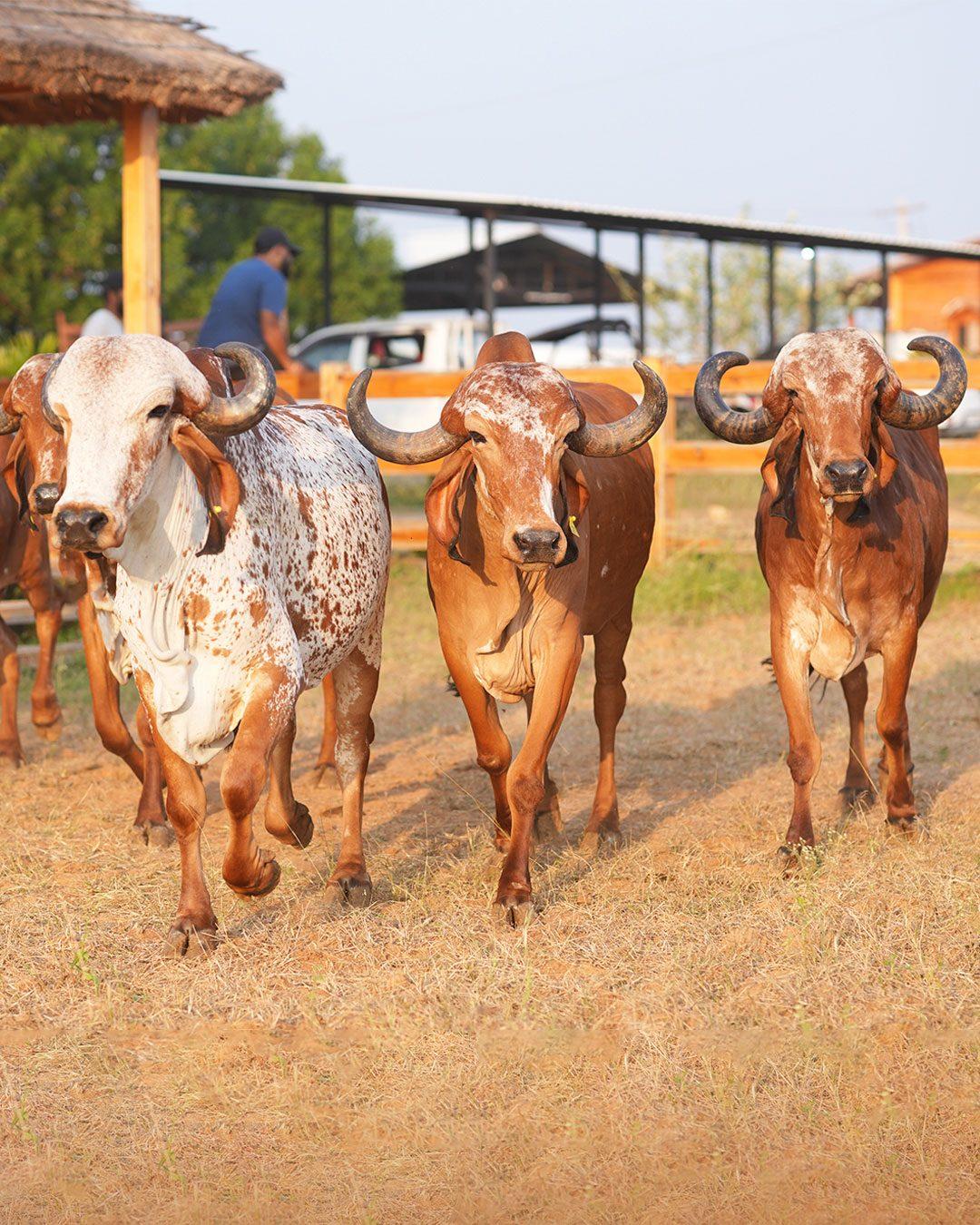
Sahiwal has the highest average yield of the indigenous breeds on this site, and rich milk. It is heat-tolerant and tick-resistant, which is why dairy farmers across Africa and Australia imported it.
Cattle · Bos indicus (zebu)
- High milk yield
- Heat tolerance
- Disease resistance
At a glance
Two kinds of number, side by side: what this breed typically gives under good management, and the national breed average recorded by ICAR-NBAGR across every kind of farm.
- Litres a day, good management
- 12–18
- Hebbevu’s typical range
- Per lactation, national average
- 2,325 kg
- ICAR-NBAGR breed average
- Milk fat
- 4.9%
- Cow body weight
- 327 kg
On organised farms, individual Sahiwal cows have recorded up to 6,000 litres in a lactation.
Getting to know the Sahiwal
Where it comes from
Ferozpur and Amritsar in Punjab and Ganganagar in Rajasthan; the purest herds are found around Fazilka and Abohar.
Named after the Sahiwal area of Montgomery district, now in Punjab, Pakistan.
Lambi BarLolaMontgomeryMultaniTeliHow to recognise it
- Coat
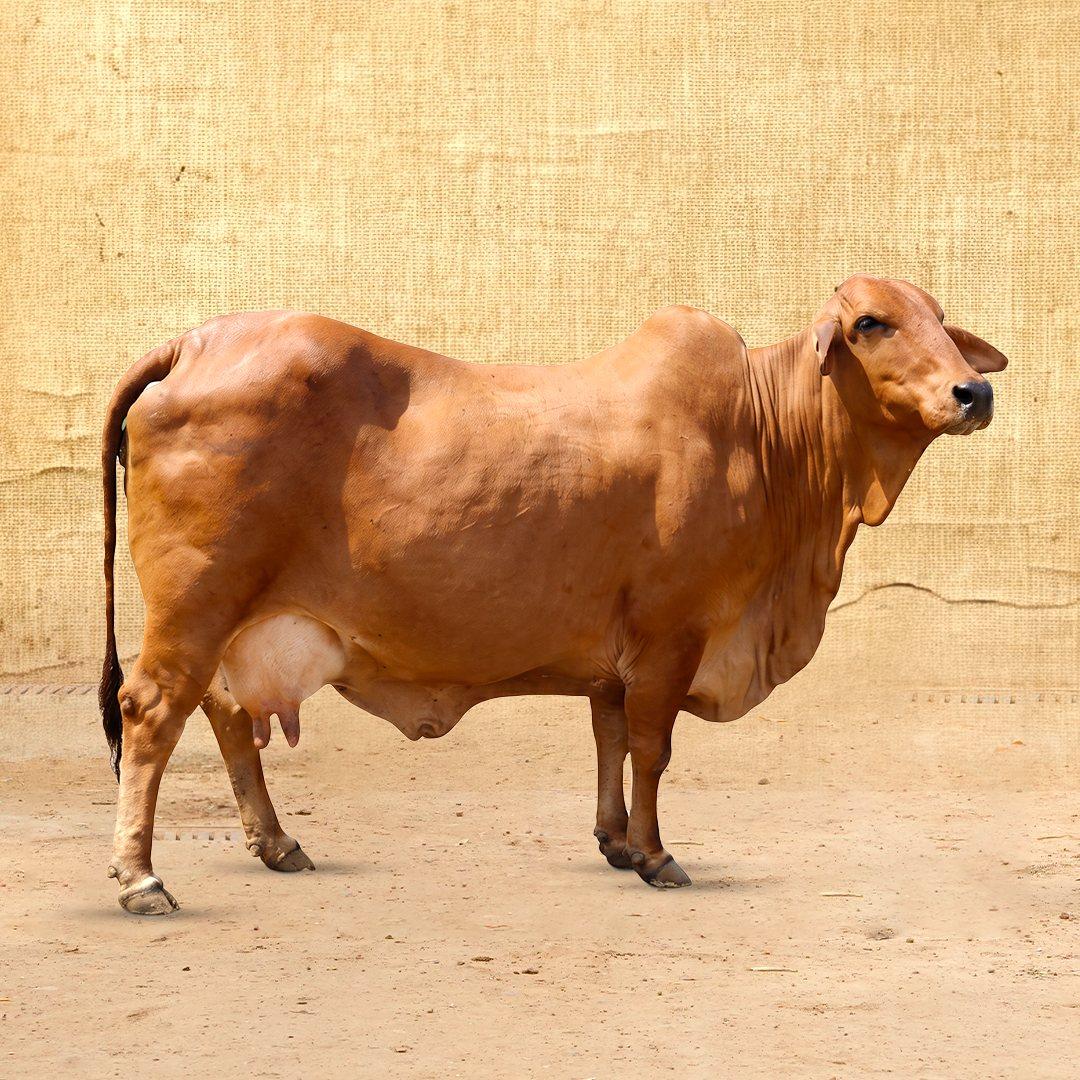
- Brownish red, from mahogany to greyish red; bulls are darker at the extremities, with occasional white patches.
- Horns
- Short and stumpy.
- Build
- Loose skin, a medium dewlap and a well-developed udder.
Size
- Cow
- 327 kg
- Bull
- 540 kg
- Cow height
- 124 cm
- Bull height
- 170 cm
Average adult size, ICAR-NBAGR.
Strengths in the field
Suitable for both Indian and global dairy systems
Built for
- Sweats about 2.6 times more than a Holstein, a key reason it copes with heat
- Reported resistance to ticks and tick-borne disease
Used for
- Milk
- Abroad: dual-purpose milk and meat, and as dams for crossbreeding
Around the world
A breed that went global
Kenya imported Sahiwal bulls and cows between 1939 and 1963 and founded its National Sahiwal Stud at Naivasha in 1962. The breed also went to Jamaica, Guyana, Burundi, Somalia, Sierra Leone and Nigeria.
In Australia, Sahiwal sires helped create the Australian Milking Zebu, bred for tick resistance in hot dairy country.
- Kenya
- Australia
- Jamaica
- Guyana
- Nigeria
Breed records
The published facts in one place. Averages, not guarantees. Individual animals and well-run herds can do far better.
| Record | Sahiwal |
|---|---|
| Species | Cattle · Bos indicus (zebu) |
| Native tract | Ferozpur and Amritsar in Punjab and Ganganagar in Rajasthan; the purest herds are found around Fazilka and Abohar. |
| Also known as | Lambi Bar, Lola, Montgomery, Multani, Teli |
| Typical daily yield, good management | 12–18 litres/day |
| National average per lactation | 2,325 kg (range 1,600–2,750 kg) |
| Milk fat | 4.9% |
| Milk type | A2 (indigenous zebu breeds are predominantly A2A2) |
| Age at first calving | 42 months |
| Calving interval | 15.6 months |
| Cow weight | 327 kg |
| Bull weight | 540 kg |
| Population | About 10.9 lakh Sahiwal in India’s 2013 breed survey. |
What to know before you choose
The strongest indigenous milker
At about 2,325 kg per lactation and 4.9% fat, Sahiwal leads the indigenous breeds on this page.
Watch fertility
The average calving interval is about 15.6 months. Good heat detection and nutrition shorten it, and every month saved is milk earned.
Heat-tolerant, not heat-proof
Studies show even Sahiwal yields fall once heat stress sets in. Shade and water still pay.
Is this the right breed for you?
Choosing the right breed is the foundation of a successful dairy operation.
- 01How hot and dry does it get on your land?
- 02Can you hold feed quality through a bad season?
- 03Does your market pay a premium for A2 milk?
- 04How close is your nearest competent vet?
Sources and other breeds
Sources (7)
- ICAR-NBAGR breed registry (AGRI-IS)
- NDDB Dairy Knowledge Portal: Sahiwal
- ILRI: Kenyan Sahiwal
- Wang et al. 2015: sweating rates of zebu and Holstein cattle
- NDRI study: heat stress and Sahiwal milk yield (Indian Journal of Dairy Science)
- FAO: the Australian Milking Zebu
- Sodhi et al. 2012, Indian Journal of Animal Sciences: A1/A2 β-casein in Indian cattle
- National averages come from the ICAR-NBAGR breed registry and the NDDB Dairy Knowledge Portal.
Interested in Sahiwal genetics?
Tell us about your herd and we will help you decide whether this breed, and IVF, makes sense for you.